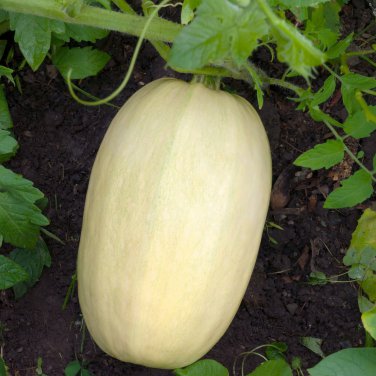
Spaghetti Winter Squash Seeds.
Low-calorie spaghetti! This distinctive type, Vegetable Spaghetti, grows a 12" long squash that produces delightful spaghetti-like strands of creamy light-yellow flesh when cooked. Bake it for 40 to 50 minutes, then slice it open and scrape out the strands. This variety takes about 100 days to mature and can be stored for up to 6 months!
Originally hailing from China, vegetable spaghetti squash seeds were brought to Japan in 1921 by a Chinese agricultural research firm. The Burpee Seed Company made this variety of spaghetti squash seeds available in the United States in 1936; many World War II Victory Gardens featured this squash, which is more commonly referred to as spaghetti squash.
Gardeners who have short growing seasons might consider starting their vegetable spaghetti squash seeds indoors about a month prior to the last anticipated frost. Since squashes do not transplant well, using peat pots is the most suitable choice. Plant two seeds in each pot, and later trim the weaker seedling. To harden the seedlings, gradually expose them to outdoor conditions for several hours each day during the week leading up to transplanting. Approximately one week after the last frost or when the soil temperature averages 60 degrees F, transplant the seedlings into very rich soil, spacing them 8-10' apart in rows that are 10-12' apart. Alternatively, you can plant the seedlings in pairs, spaced 8-10' apart. For direct sowing, plant the seeds a week after the frost at a depth of 1/2" and 3-4' apart, then thin them to 8-10' apart. For companion planting advantages, grow squashes alongside corn, but steer clear of planting them with potatoes.
As squash seedlings are sensitive to frost, ensure you provide protective coverings if cold weather is forecasted. Maintain consistently moist soil, but refrain from wetting the leaves, as this can lead to diseases like rot or mildew. Once the vines start to grow, applying a layer of mulch will help retain moisture and suppress weeds; mulch will also keep the squashes clean and shield them from excessive soil contact. By midsummer, remove all blooms to focus the plant's energy on the developing squashes.
Squashes can be picked as soon as the stem starts to dry and the skin becomes too tough to puncture with a fingernail. Since cold weather can harm squashes, they should be harvested before the first frost. Use a sharp knife to cut the stem, leaving a 2-3" length. Avoid carrying the squash by the stem; if it breaks off, use it immediately, as this can lead to rapid deterioration. Cure the squashes in sunlight or a dry area until the stem shrivels; do not wash those intended for storage.
To prepare spaghetti squash seeds, immerse them in water for 24 hours, then drain and wrap them in a moist paper towel for several days until they start to sprout. This technique boosts germination rates when you plant them in your garden. savvygardening.com greengardeningmatters.blogspot.com
Priming Spaghetti Squash Seeds
What is Seed Priming?
Seed priming is a pre-sowing method that improves germination. It consists of soaking seeds in water or a nutrient solution to kickstart the germination process without allowing them to sprout. This enhances seedling vigor and uniformity.
Steps for Priming Spaghetti Squash Seeds
Select Seeds
Opt for high-quality spaghetti squash seeds for the priming process.
Prepare a Soaking Solution
Utilize clean water or a diluted nutrient solution. A typical ratio is 1 part fertilizer to 10 parts water.
Soak the Seeds
Submerge the seeds in the solution for 12 to 24 hours. Ensure they are completely covered.
Drain and Dry
Once soaked, drain the seeds and lay them out on a paper towel. Let them dry for a few hours, making sure they are not damp when stored.
Store Properly
Keep the primed seeds in a cool, dry location until you are ready to plant them.
Benefits of Priming
Faster Germination: Primed seeds usually germinate faster than those that are unprimed.
Improved Seedling Health: This method can result in stronger seedlings that are more resilient to stress.
Additional Tips
Timing: It’s best to prime seeds a few days before planting.
Temperature: Maintain a warm temperature for the seeds during the soaking phase to boost effectiveness.
By adhering to these steps, you can successfully prime your spaghetti squash seeds for enhanced growth and yield.
Medicinal Benefits:
Spaghetti squash offers several health benefits, including being low in calories and high in fiber, which aids digestion and promotes a feeling of fullness. It is also rich in vitamins A and C, antioxidants, and may help reduce the risk of chronic diseases like heart disease and cancer.
Weight Management: Spaghetti squash is low in calories and high in fiber, which can help you feel satiated, making weight management easier.
Digestive Health: Its fiber content encourages regular bowel movements and can aid in preventing constipation, thereby lowering the chances of digestive issues.
Antioxidant Properties: Packed with beta-carotene and vitamin C, spaghetti squash helps shield cells from damage, potentially reducing the risk of chronic illnesses such as cancer.
Heart Health: The potassium found in spaghetti squash aids in regulating blood pressure, while its fiber content enhances heart health by improving cholesterol levels.
Bone Health: Essential nutrients like calcium and manganese play a role in strengthening bones, thereby decreasing the risk of osteoporosis.
Vision Health: Beta-carotene is converted into vitamin A, which is crucial for maintaining healthy vision and preventing night blindness.
Adding spaghetti squash to your meals can offer these health advantages while acting as a nutritious substitute for conventional pasta.
Free Shipping!